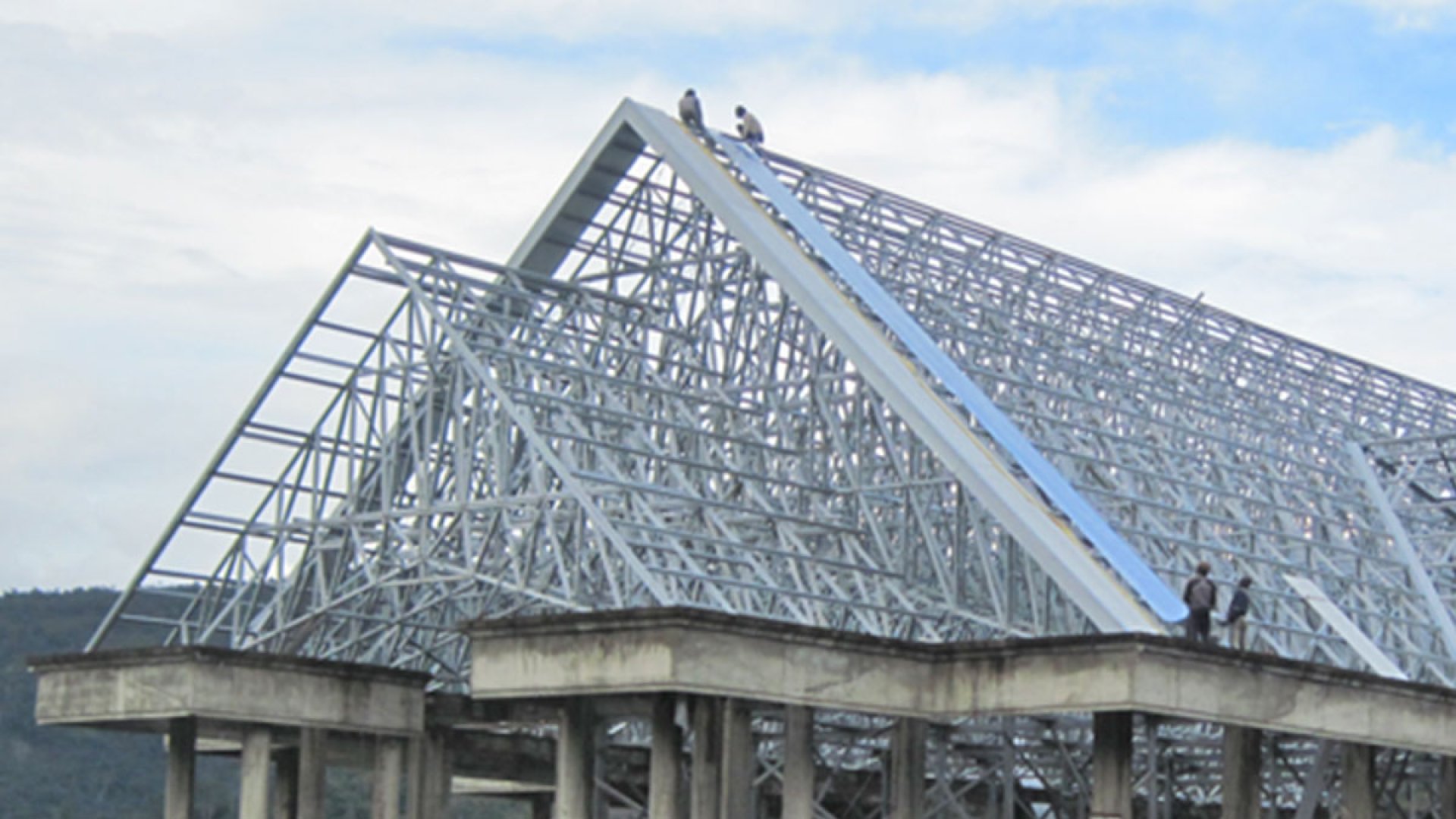
Development of Lightweight Steel Roof Framing
Lightweight steel roof framing is a construction solution that has been rapidly growing in Indonesia. Its ability to replace traditional timber roof structures has become increasingly well known, especially as high-quality structural timber becomes more difficult to source and significantly more expensive.
Today, the cost of lightweight steel roof framing is highly competitive compared to timber trusses. This is a major shift from its early adoption phase, when lightweight steel structures were typically 10–20% more expensive than timber alternatives. In many cases today, lightweight steel roof framing can be 10–20% more affordable, although this comparison remains relative, particularly when measured against Class I structural timber.
Initially, lightweight steel roof framing was marketed by manufacturers working closely with overseas steel system providers. As a result, design standards, regulations, and installation systems followed those applied in the countries where the technology originated. At the same time, several local manufacturers developed their own profiles and structural systems, supported by dedicated research and engineering teams. These systems were commonly based on established international standards, such as AISI Standards (United States) and AS/NZS Standards (Australia and New Zealand).
Both approaches offered clearly defined design and installation standards, provided product warranties, and were supported by trained installation teams operating through authorized distributors or applicators.
However, as market demand increased and business opportunities expanded—combined with the assumption that lightweight steel could be installed independently—many profile-only suppliers began to emerge. These suppliers sell lightweight steel sections through retail building material stores without offering an integrated system or trained installation teams. As a result, installers are often only capable of handling standard residential buildings with short spans, due to the absence of proper design standards for larger spans.
For this reason, consumers should be well informed when selecting a roof framing system. A roof structure is a long-term investment and directly affects the safety of building occupants. Further discussion on this topic is available in the article Roof Truss Systems: Component-Based vs. System-Based Approaches.
Advantages of Lightweight Steel Roof Framing
1. Lighter Than Timber Structures
Lightweight steel roof framing typically weighs 6–8 kg/m², while timber roof structures weigh approximately 15 kg/m². This significantly reduces the load transferred to the building’s foundation.
2. Does Not Propagate Fire
Unlike timber, which can easily spread fire once exposed to an ignition source, lightweight steel does not propagate flames. However, steel loses strength under high temperatures. The use of gypsum ceiling panels helps reduce heat radiation exposure to the roof structure.
3. Termite-Resistant and Corrosion-Protected
Lightweight steel is naturally termite-resistant. To address corrosion risks, steel sections are protected with anti-corrosion coatings, as discussed further in the section on corrosion-resistant coatings.
4. Durable and Low Maintenance
With corrosion resistance designed to last for decades, lightweight steel offers long structural service life. Hot-dipped coating systems also result in a low-maintenance product—unlike timber, which requires periodic anti-termite treatment and repainting.
5. Higher Precision and Straightness
Lightweight steel components are industrially manufactured, resulting in consistent dimensions, straightness, and precision. Timber, as a natural material, varies in size, may shrink over time, and can warp—often requiring additional processing to achieve straight members.
Limitations of Lightweight Steel Roof Framing
1. Strong but Less Rigid
The use of high-strength steel allows lightweight steel roof framing to resist design loads effectively. However, the thin steel plates used can result in lower stiffness compared to conventional steel or solid timber structures.
To address this, sufficient bracing and structural support must be provided to ensure overall stability and proper three-dimensional structural behavior.
2. Closer Truss Spacing
Unlike timber trusses, which can be spaced up to 4 meters apart, lightweight steel trusses typically require spacing of 1.2 to 1.5 meters. This results in a denser roof structure and limits the usability of attic space.
3. Brittle Structural Failure Behavior
Failure in lightweight steel roof framing tends to be brittle and sudden. The structure may collapse without visible warning signs, such as noticeable deflection beforehand.
Structural System of Lightweight Steel Roof Framing
In general, a lightweight steel roof structure consists of trusses installed at regular intervals to form the planned roof plane.
The trusses use a triangulated truss system, forming closed triangular frames—similar in concept to timber trusses. The key difference lies in the overall system configuration.
Comparison of Roof Framing Systems
Lightweight Steel Roof Framing
-
Consists of only two main components: Trusses and Battens
-
Truss spacing is closer
Timber Roof Framing
-
Consists of four main components: Trusses, Rafters, Purlins, and Battens
-
Truss spacing is wider